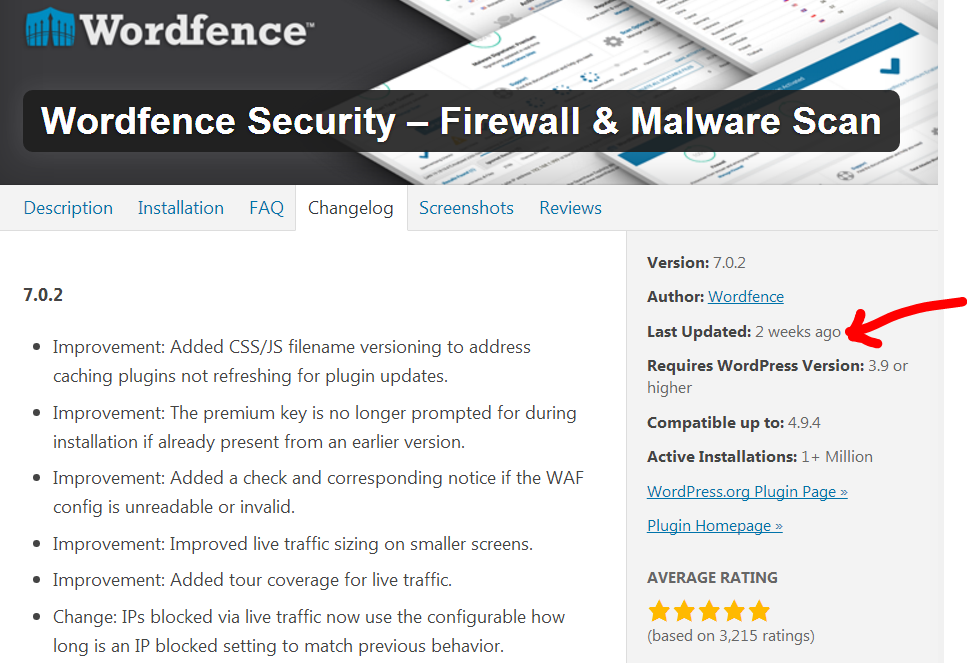
That level of detail is kinda unnecessary. What does it matter if the plugin was updated 1 week and 6 days ago or 2 weeks ago? The purpose is to show that the plugin is regularly updated, not to provide detailed information.
Hi Samuel,
I like to see plugin updates mature or season a bit before updating them. I’ve noticed at times when an update arrives, it is quickly updated/patched to correct a problem. It’s helpful to see that an update has “seasoned” 8 days (without quick/emergency patches), rather than “two weeks” (when it’s really only been 8 days).
I don’t think that level of detail hurts anything, and it would be consistent with other date formats, such as the area I pointed out.
Just a suggestion 🙂
Thanks,
John
It’s code, not a fine wine. It doesn’t change with age. “Seasoning” it is slightly ridiculous.
I’m sorry, perhaps I made a mistake posting to this forum. Is there another forum that welcomes ideas/suggestions?
I simply wanted to suggest that the “Last Updated” field be consistent in both places.
Of course a plugin doesn’t get better on its own.
I used to rush to update software, as soon an update was made, only for it to create other issues. I was trying to making the point that after a plugin is updated, it causes a problem, the author writes a fix, and a new update is published soon thereafter. It’s nice to know how much time has passed since its last update as a gauge of its stability.
Thanks!